
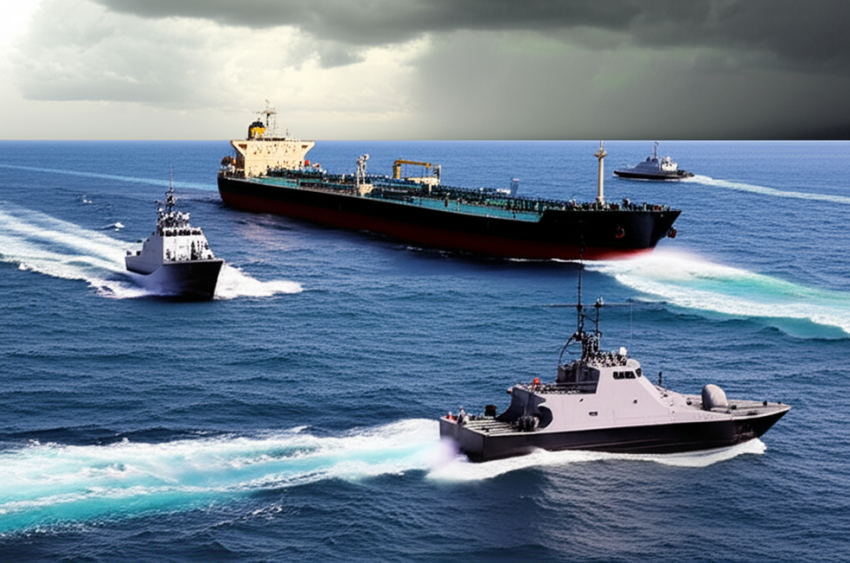
Iranian Forces Intercept and Redirect Tanker: A New Chapter in Maritime Tensions ⛴️⚓
A tanker, seen by some as just another vessel traversing the vast expanse of the sea, recently became the focal point of international tension. According to maritime security sources, Iranian forces intercepted and redirected a tanker towards Iranian waters. Ironically, while the world clamors for peace and stability, the waters seem to be thickening with the ghosts of naval confrontations past, evoking a sense of déjà vu in a region constantly marred by conflict.
The incident raises critical questions about maritime security and international law. As oil prices fluctuate like the unpredictable tides, every tanker is not just a vessel of commerce, but also a potential flashpoint. The interception serves as a stark reminder of the delicate balance in a region where nations are often at odds, and the shipping lanes become battlegrounds more than highways of trade.
A Tangible Yet Elusive Intersection of Power and Piracy
At a glance, one might dismiss this interception as a mere act of piracy dressed in military garb. After all, when does national security trump the sanctity of commercial shipping? The irony is heavy: the very forces meant to protect a nation’s interests sometimes undermine the safety of global trade. It’s as if the ghosts of historical piracy, menacing and unseen, have donned a new cloak of legitimacy.
What sets this incident apart is its geopolitical implications. The Persian Gulf is akin to a grand chessboard where every move is closely scrutinized, each tanker a piece whose capture could shift the balance of power. The United States and its allies have often patrolled these waters, ostensibly to ensure freedom of navigation. Yet, Iranian naval forces have exhibited a formidable presence, twisting their military might like a caliper around the shipping routes that fuel economies worldwide.
Maritime Law and the Art of War
Historically, nations respected maritime law, navigating through the waters with an understanding akin to a gentleman’s agreement. But with Iran’s recent military maneuvers, the very fabric of these treaties may be unraveling. Suddenly, ships traverse these waters as if walking a tightrope—one misstep could lead to escalating tit-for-tat engagements, reminiscent of the world wars fought not just in the sky and land, but across the high seas.
- Geopolitical chess: The tanker incident is a dramatic knuckle of the geopolitical fist. Each nation’s naval maneuvers resemble a game of chess, where the stakes are not merely territorial; they involve resource control, influence, and power.
- Commercial piracy or national security?: Are Iranian forces defending their sovereignty or flexing their muscles in an unsettling new form of maritime warfare? Is this confrontation an aberration in the order of things, or a harbinger of a chaotic new norm?
- Civilian ramifications: For every attempt to solidify national interests, there lies a counter, as civilian shipping persists to be caught in this geopolitical crossfire, fueling anxiety among shipowners and maritime insurers alike.
The Future—A Storm on the Horizon?
As tensions simmer in the Iranian Gulf, one can’t help but ask: will we witness an escalation, or will cooler heads prevail? Every tanker on these turbulent waters now sails with an added weight—the realization that their passage can be as treacherous as navigating through a storm. Will shipping companies develop new routes, circumventing this geopolitical tempest, or will they gamble with the tides, hoping for safety in numbers?
In a landscape where maritime security is increasingly daunting, the recent interception serves as a clarion call for nations reliant on these shipping lanes. As companies prepare contingency plans, they must also grapple with the philosophical question born from uncertainty: is the sea still a pathway to prosperity or has it transformed into an arena for conflict?
In delineating the essence of this dispute, we stand at a juncture. The Iranian forces, in their dramatic interception of the tanker, have not only redirected a vessel; they have redirected the narrative surrounding maritime security. Perhaps it is time for the global community to navigate these troubled waters with renewed vigilance, recognizing that the tides may yet shift again, dragging along both commerce and conflict.